
The Billion-Ringgit Blueprint: How EV Hubs Are Redefining Malaysia’s Highway Wealth
Updated: May 20, 2025
An EVCC™ Perspective, 2025 — Electric Vehicle Charging Corridor

Executive Summary
Highways have historically served as vital arteries of national growth — facilitating movement, trade, and development across regions. Today, however, highways are evolving beyond transportation infrastructure. They are becoming dynamic platforms of energy, commerce, and digital connectivity, poised to define the economic architecture of a sustainable future.
At the forefront of this transformation is EVCC™ — the 'Electric Vehicle Charging Corridor' — reimagining Malaysia’s most strategic mobility corridors by integrating Platinum-certified Rest Service Areas (RSAs) with next-generation EV hubs. This is not merely an upgrade in infrastructure. It is the careful assembly of a new economic platform —one that, by its design and strategic relevance, is naturally consolidating into a future billion-ringgit infrastructure base.
1. A New Economic Role for Highway Infrastructure
Traditionally, highways monetized vehicular movement through tolls and basic service facilities. Their economic influence, though significant, was linear and transaction-driven. The electric mobility transition is fundamentally altering this structure.
In the era of EVs, highways must operate as multi-functional ecosystems —serving as platforms for renewable energy distribution, sustainable commerce, traveler experiences, and digital mobility services. Strategically located RSAs, reengineered as EV hubs, will anchor these platforms — becoming critical economic nodes that facilitate not only transportation, but the flow of energy, commerce, and data.
Ownership and integration of these hubs along major corridors will increasingly define the strategic control points of the national and regional green economy.
2. EVCC™’s Strategic Blueprint: Building Malaysia’s New Mobility Spine
EVCC™’s vision is precise and systematic.
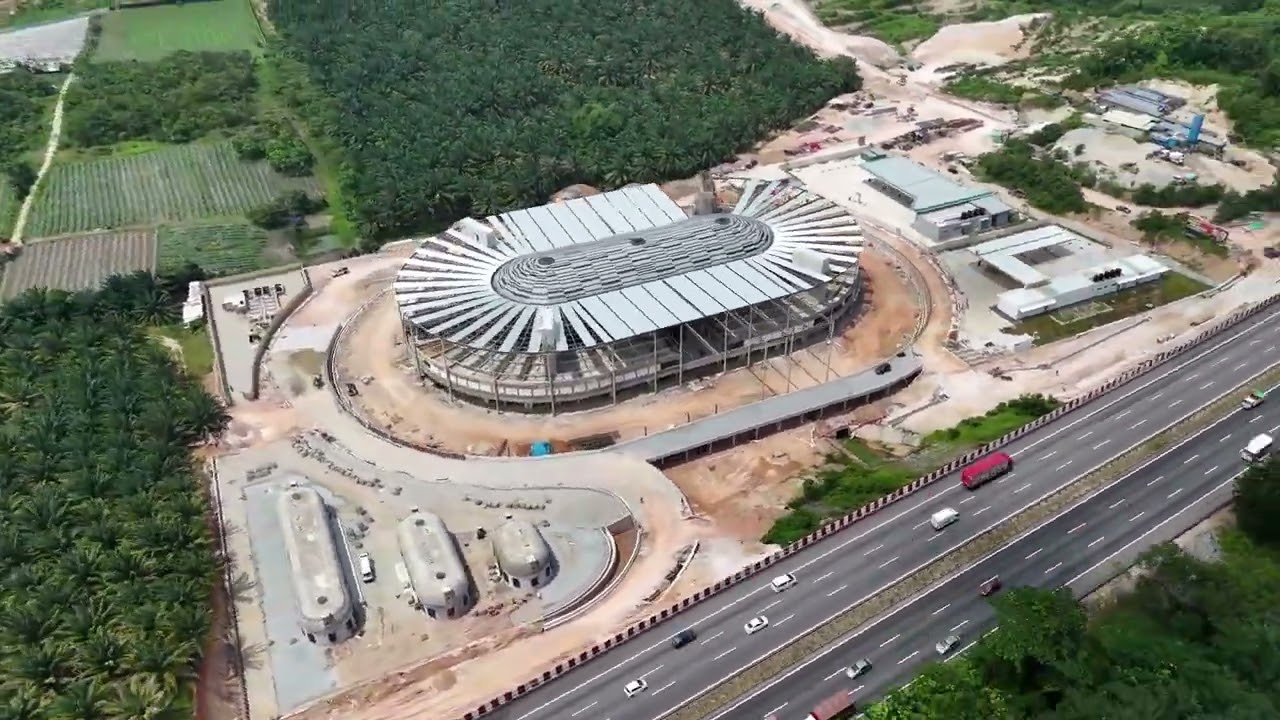
Beginning with PEDAS RSA — Malaysia’s first Rest Service Area to achieve Provisional Platinum GreenRE Certification —EVCC™ is developing a national network of EV mobility hubs seamlessly integrated with future-ready RSAs.
Over the coming years, EVCC™ aims to expand across 10 to 12 strategic RSA locations along the PLUS North-South Expressway and other key corridors, embedding:
Ultra-fast EV charging infrastructure
Renewable energy generation systems
Curated retail and lifestyle ecosystems
Smart logistics and digital traveler engagement platforms
Each site is designed not as a standalone asset but as part of an interconnected, resilient corridor. As this network grows, it will quietly form Malaysia’s next economic spine for green mobility and sustainable commerce.
3. Why Future Mobility Platforms Are Naturally Assembling Billion-Ringgit Value
Across global infrastructure markets, a consistent pattern is emerging: Assets that integrate mobility, clean energy, digital ecosystems, and ESG standards are consolidating into the most valuable infrastructure platforms of the 21st century. In Malaysia, as electric mobility accelerates and national decarbonization targets sharpen focus, the structural forces shaping infrastructure valuations are now firmly in motion.
New developments that combine diversified recurring revenue, scalable network effects, and sustainable design are naturally positioned to achieve significant economic scale — including consolidation into billion-ringgit valuations. Future-ready mobility hubs are no longer singular-use facilities. They are multi-dimensional economic platforms where energy generation, commerce, digital services, and travel intersect. Revenue streams multiply across EV charging, renewable energy production, retail leasing, smart parking, digital engagement, and logistics integration — creating resilient, diversified cash flows that institutional capital increasingly favors.
Moreover, when such hubs are systematically deployed along strategic corridors — as interconnected nodes rather than isolated projects — they unlock compounding network value. Traveler loyalty strengthens across multiple stops; data ecosystems integrate across regions; and green energy systems optimize at corridor scale. This network effect amplifies both economic yield and long-term asset strategic relevance.
Globally, infrastructure assets that deliver these characteristics — sustainability, recurring revenues, digital integration, scalability — consistently attract premium valuation multiples, often exceeding 12 to 18 times forward earnings. ESG-certified assets, particularly those achieving Platinum-grade standards, command even higher market premiums driven by accelerating sustainable capital mandates among sovereign funds, pensions, and institutional investors.
It is within this global infrastructure revaluation trend that next-generation highway platforms — thoughtfully designed to integrate EV mobility, commerce, renewable energy, and ESG leadership — are naturally assembling into billion-ringgit asset classes. The underlying forces are not speculative. They are the structural economics of mobility, sustainability, and platform logic converging — in Malaysia, in Southeast Asia, and across every rapidly advancing economy.
4. Integrated Synergy: EV Hubs and RSAs as Unified Economic Engines
In EVCC™’s strategic design, EV hubs and RSAs are not independent ventures. They operate as synergistic economic engines, mutually reinforcing one another’s value.
The integration of ultra-fast EV charging drives longer traveler dwell times, increasing consumption at RSA retail and lifestyle outlets. High-quality RSA environments attract EV travelers seeking premium amenities during charging cycles, reinforcing repeat usage. Renewable energy systems embedded within hubs lower operational costs while enhancing ESG credentials and energy resilience. Meanwhile, digital traveler engagement platforms capture user data, enabling loyalty program development and diversified monetization pathways.
This ecosystem model transforms each site from a transit facility into a dynamic commercial hub, where mobility, energy, commerce, and data converge to drive sustainable, resilient profitability across the platform.
5. Malaysia’s Opportunity to Lead Southeast Asia’s Green Mobility Economy
Geographically and economically, Malaysia holds a privileged position within Southeast Asia’s growth corridors. The PLUS North-South Expressway serves as the arterial spine connecting Singapore, Kuala Lumpur, and Thailand —supporting a majority of Malaysia’s domestic GDP and regional trade.
By systematically deploying Platinum-rated EV hubs along this corridor, EVCC™ is positioning Malaysia not merely as a domestic success case, but as the anchor of Southeast Asia’s green mobility network. This leadership unlocks opportunities across sustainable tourism, cross-border electric logistics, and smart mobility innovation —ensuring that Malaysia’s highways are not only pathways of travel, but platforms of regional prosperity in the low-carbon economy.
Conclusion: Assembling Enduring Economic Value
The great infrastructures of history were built not for the moment, but for the future. Today, Malaysia’s highways are undergoing a transformation —quietly assembling the infrastructure platforms that will power its next generation of growth.
EVCC™’s integrated EV hub and RSA network, systematically developed along strategic national corridors, is carefully constructing a platform of resilient, diversified, future-proof economic value.
The billion-ringgit blueprint is not a vision or an ambition. It is the inevitable outcome of building at the intersection of mobility, energy, commerce, and sustainability —at precisely the moment when global capital, consumer behavior, and national priorities demand it. The foundation stones have been laid. The corridors are forming.
The future is already in motion.


Comments