
Lessons from Korea : How ITS Suwon 2025 Inspires the Future of Malaysia’s Expressways

Image Credit : YB Dato’ Sri Alexander during the technical visit to KEC headquarters in conjunction with the ITS Asia-Pacific Forum 2025.
Malaysia strengthened its commitment to smarter, greener expressways through participation in the Asia-Pacific Intelligent Transport Systems (ITS) Forum 2025 in Suwon, South Korea. The delegation, led by YB Dato’ Sri Alexander Nanta Linggi, Minister of Works, and supported by senior representatives from Lembaga Lebuhraya Malaysia (LLM) and PLUS Malaysia Berhad, highlighted Malaysia’s determination to place innovation, safety, and sustainability at the heart of its infrastructure agenda.
This international forum brought together governments, industry leaders, and technology innovators to showcase the latest advancements in digitalization, road safety, sustainable infrastructure, and smart mobility. For Malaysia, the event served as both a diplomatic platform and a practical learning opportunity -providing insights that can be adapted to enhance our expressways and roadside facilities.
1. Smart Transport Meets Sustainability
One of the core lessons from Korea is that intelligent transport systems (ITS) and sustainability are inseparable. Korea’s highways are deeply integrated with real-time traffic management, automated enforcement, and energy-efficient infrastructure. These systems reduce congestion, lower emissions, and create safer journeys for road users.
For Malaysia, the message is clear: the future of expressways must combine digital capability with ESG-driven design. This is not just about managing traffic, but about creating smarter, greener corridors that add long-term value to the economy and environment.
2. Digitalization as the Backbone of Efficiency
Malaysia’s highways carry some of the heaviest traffic volumes in Southeast Asia. Lessons from Suwon show that data-driven decision making is key to managing such scale. Artificial intelligence, big data analytics, and sensor-driven technologies can optimize traffic flow, predict congestion before it happens, and improve safety through early detection of incidents.
As Malaysia upgrades its expressway network, digitalization must become the foundation—allowing both highway operators and regulators to move from reactive problem-solving to proactive, predictive management.
3. Strengthening Safety Through Innovation
Korea’s approach to road safety emphasizes smart enforcement and automation. By reducing reliance on manual checks and increasing the use of integrated digital monitoring, compliance improves, accidents decline, and enforcement becomes more consistent.
Malaysia, through LLM and PLUS, is already advancing in this direction. However, the Korean example shows how far technology can extend to enhance both user safety and system efficiency—an important consideration as traffic density and vehicle mix evolve with the rise of electric vehicles.
4. Collaboration and Knowledge Exchange
The presence of the Ministry of Works, LLM, and PLUS at ITS Suwon 2025 symbolizes Malaysia’s commitment to international collaboration. Strategic engagement with Korea not only strengthens bilateral ties but also supports knowledge transfer and technical cooperation. These partnerships provide Malaysia with access to best practices, tested systems, and innovative policies that can be adapted to suit the local context.
For Malaysia’s highway ecosystem, this collaboration reinforces the national ITS Roadmap 2030 and strengthens our readiness to integrate next-generation transport technologies.
The Relevance to EVCC™ Pedas RSA
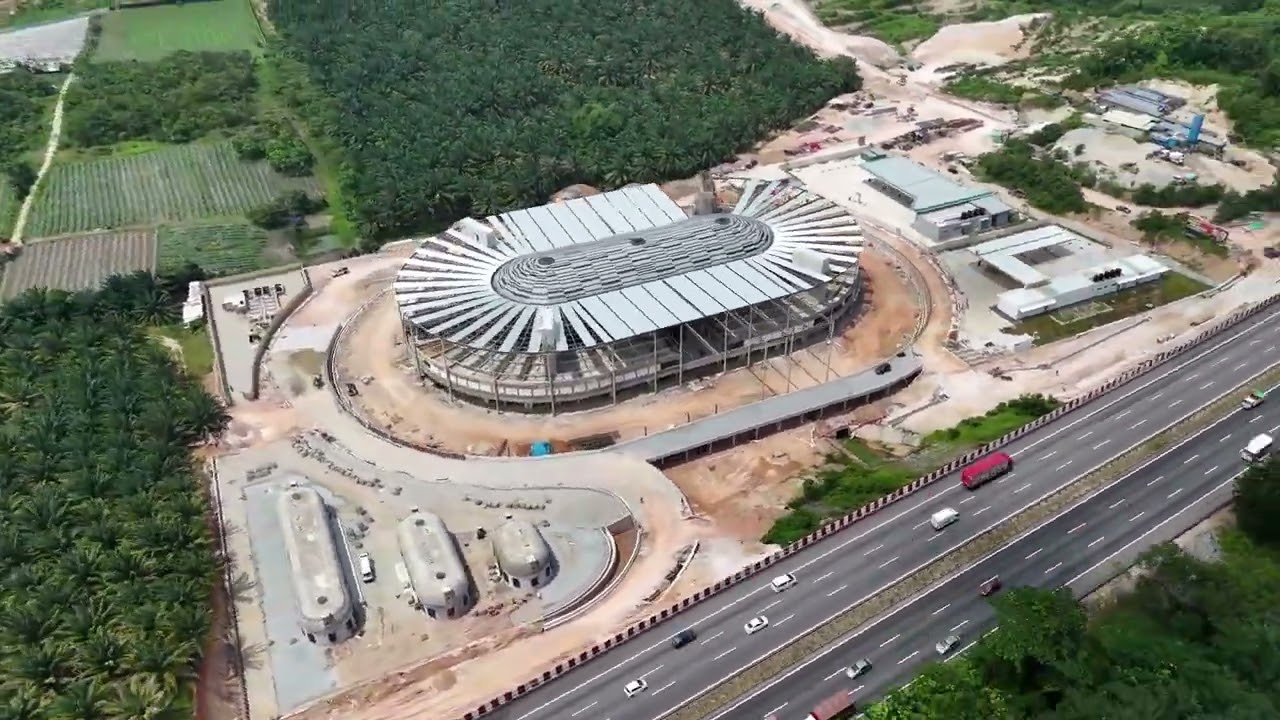
The lessons from Korea directly inform the vision of EVCC™ Pedas RSA, Malaysia’s first privately developed EV Hub PLUS Expressway. EVCC™ Pedas RSA is designed to combine the principles showcased in Suwon - digitalization, safety, and sustainability with a unique local twist: positioning roadside development as a lifestyle destination.
By targeting Platinum Rated GreenRE certification, EVCC™ Pedas RSA demonstrates how ESG values can be embedded into roadside projects. Rainwater harvesting, energy-efficient buildings, and environmentally conscious design ensure that sustainability is not an afterthought but the foundation.
At the same time, the project’s dual-access model - serving both expressway users and local communities ensures commercial viability while generating socio-economic benefits for the surrounding region. This approach aligns with Korea’s philosophy of integrating infrastructure into broader community and environmental goals.
Conclusion: Towards a Smarter, Safer, Greener Expressway Future
EVCC™ Pedas RSA stands as a tangible manifestation of this vision. By embracing digital innovation, embedding ESG principles, and targeting Platinum GreenRE certification, it sets a new benchmark for roadside development in Malaysia.
The journey ahead is not only about building more highways. It is about building smarter, safer, and greener expressways—and ensuring that every stop along the way, from Suwon to Pedas, reflects the future we aspire to.


Comments