
Highway MSA Moto Hospitality’s £2 Billion Transformation: A Blueprint for Malaysia’s R&R Revolution
Updated: May 16, 2025

Image Credit: Moto Hospitality UK
In the evolving world of infrastructure investment, few sectors have experienced such a surprising and profitable renaissance as the highway rest stop. Long seen as functional but uninspiring, service areas around the world are being transformed into high-performing retail and mobility hubs — drawing the attention of private equity giants and infrastructure funds alike.
One of the most compelling case studies is Moto Hospitality, the United Kingdom’s largest motorway service operator. In the past decade, Moto has undergone a remarkable transformation that has pushed its valuation past £2 billion, as reported by Sky News in early 2024, ahead of a potential sale by its owners, CVC Capital Partners. Its journey offers a valuable roadmap — and a powerful justification — for what EVCC™ is now undertaking in Malaysia.
From Fuel Stop to Destination
Moto operates 69 service areas across the UK, welcoming over 120 million travelers annually. Once known primarily for fuel, basic food, and restroom facilities, Moto has strategically repositioned itself as a mobility-retail platform with a focus on comfort, brand partnerships, and electric mobility.
Its sites now offer:
Premium F&B outlets such as Pret A Manger, KFC, Costa Coffee, and Greggs
Retail spaces including WHSmith and Marks & Spencer Simply Food
Modernized interiors, family amenities, upgraded washrooms, and fast Wi-Fi
Ample parking, accessibility improvements, and traffic-flow enhancements
Crucially, Moto has invested heavily in electric vehicle (EV) charging infrastructure, partnering with Tesla and GRIDSERVE to install over 600 high-speed EV chargers across its network. Its flagship site in Rugby features one of the largest EV charging hubs in Europe, with 24 ultra-rapid chargers — making it a preferred stop for EV travelers.
This multi-pronged investment strategy has significantly diversified Moto’s revenue and resilience. As of its latest financial report, non-fuel income grew to £456.1 million, up from £404.7 million the previous year — a figure reflecting strong performance across retail, food service, and EV-related services.
A £2 Billion Valuation — and Why It Matters
The financial markets have taken notice. Moto's parent company, CVC Capital Partners, is reportedly preparing the company for sale at a valuation exceeding £2 billion. This valuation is underpinned not just by land and traffic, but by long-term lease revenue, strong brand tenancy, and a resilient consumer spend profile — characteristics that make it a prime infrastructure-retail hybrid.
Its valuation is being benchmarked alongside logistics REITs and utility-style infrastructure funds. According to analysts, the EV charging opportunity alone could unlock significant growth, as each rest area becomes a strategic energy distribution and data point.
In many ways, Moto is no longer a rest stop operator — it’s an integrated mobility real estate platform, and its financials reflect that shift.
Malaysia's Moment: Learning from Moto
Malaysia’s PLUS North-South Expressway, which carries over 1.7 million vehicles daily, is the backbone of the nation’s road network — a powerful, high-traffic corridor with immense commercial potential. While existing rest-service-areas (R&Rs) have served travelers for decades, there remains a significant opportunity to elevate them to the next level — with scalable, branded, and ESG-aligned infrastructure akin to what Moto has achieved in the UK.
That is precisely what EVCC™ (Electric Vehicle Charging Corridor) aims to build.
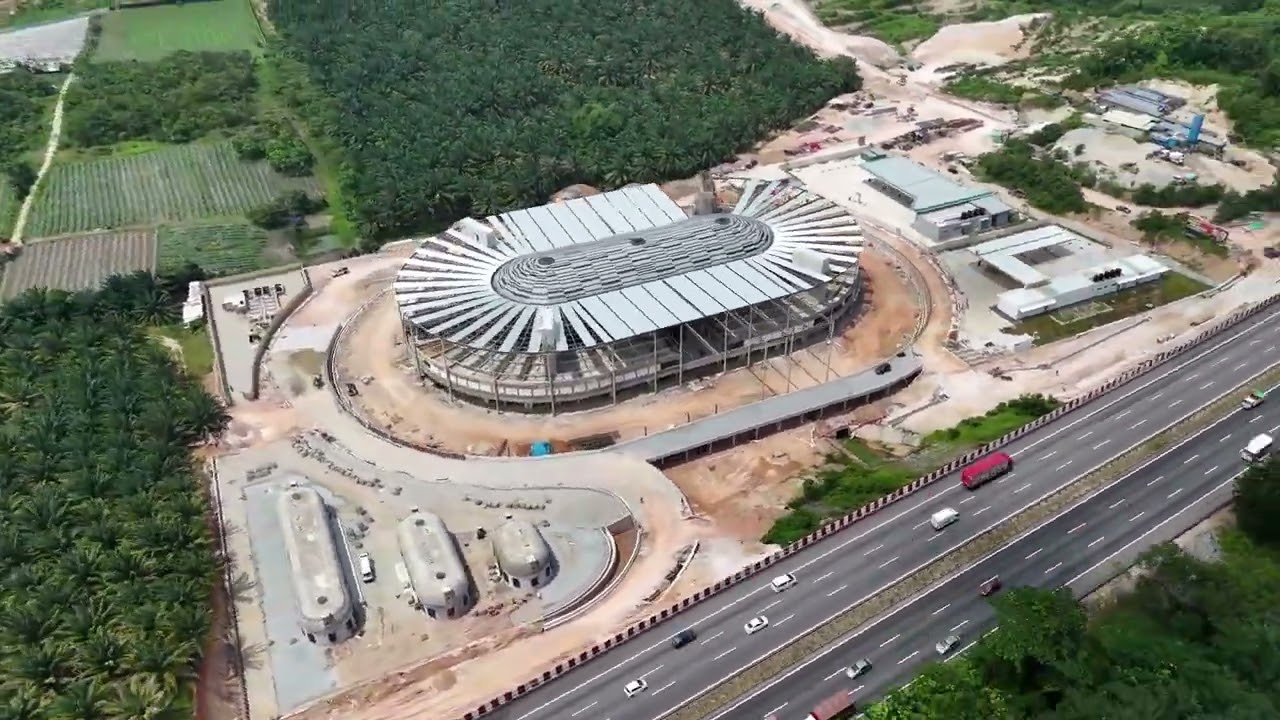
The upcoming PEDAS RSA @ KM241 (Southbound) is EVCC™’s first flagship site and the first privately developed, Platinum-certified RSA along the PLUS network. Unlike legacy R&R, it is designed from the ground up for:
EV integration with Tesla and Gentari charging stations
Retail designed for experience, not just convenience
Digital tenancy & analytics (visitor flow)
Green building technologies, including solar power and rainwater harvesting
Lifestyle placemaking with an architecturally striking main building.
This is Malaysia’s first real attempt to monetize highway traffic like a mall, with predictable daily footfall and long-term commercial tenancy. It is not a fuel station — it is a mobility-based commercial estate.
Investor Insight: Why This Matters
Moto’s valuation proves the model. Infrastructure funds and private equity didn’t invest in Moto because of nostalgia — they did so because:
Highway-linked sites offer recurring traffic = recurring spend
EV adoption is shifting revenue from fossil fuel to energy + services
Branded rest stops drive dwell time, impulse spending, and loyalty
Lease-backed tenancy models provide predictable yield
ESG-aligned infrastructure draws both consumer trust and capital premium
EVCC™'s model mirrors these fundamentals — only it’s earlier on the curve, with land acquired at significantly lower cost and upside still ahead. For visionary Malaysian investors, this presents a rare opportunity: to help shape — and share in — the first platform of its kind in Southeast Asia.
Conclusion: Build the Next Moto, Before Someone Else Does
In 2013, Moto was just a service station chain. Ten years later, it’s a £2 billion platform at the intersection of mobility, retail, and infrastructure.
In 2025, EVCC™ is beginning that same journey — only in a market with more EV tailwinds, more government policy alignment, and a blank canvas.
This is the moment to invest.
Learn more at www.evcc.my
Request investor access: investor@evcc.my


Comments