
The High-Voltage Backbone of EVCC™ Pedas RSA : Why 11kV Power Intake is Critical for Malaysia’s First EV Highway Hub

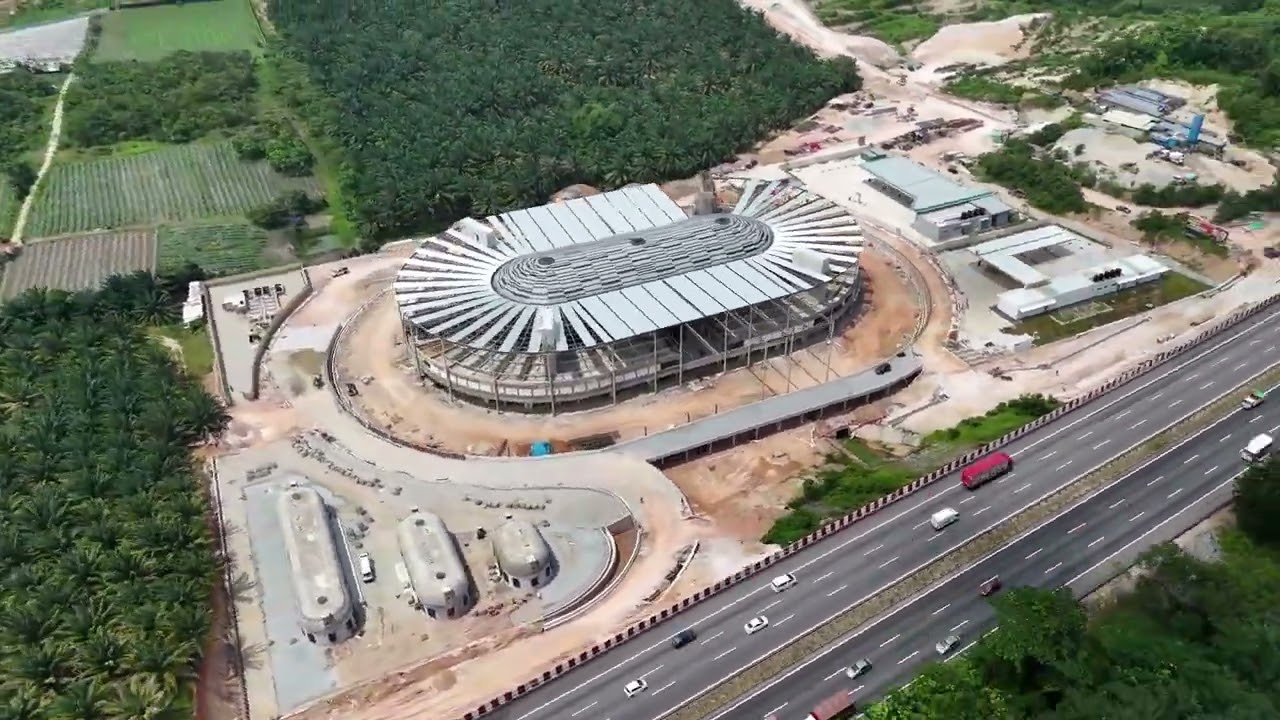
Image Credit : EVCC™ Pedas RSA Begins Construction of Its 11kV TNB Substation
As Malaysia transitions to a low-carbon mobility future, the infrastructure powering this shift must be as progressive as the vehicles it supports. EVCC™ Pedas RSA, located at KM241 southbound along the PLUS Expressway, is not a typical Rest & Service Area. Designed to host high-power EV chargers, commercial drive-thru outlets, retail food outlet and fuel stations, this RSA is engineered for continuous high-load operations.
To meet this demand, EVCC™ Pedas RSA has adopted a direct 11kV medium-voltage (MV) connection from Tenaga Nasional Berhad (TNB)—a critical step that will distinguish it from all previous highway developments.
Why Low-Voltage (LV) Supply Is Inadequate
Most commercial premises in Malaysia operate on 415V three-phase low-voltage supply, which is sufficient for retail, offices, and basic facilities. However, in the case of a high-load, EV-centric rest stop, this becomes a technical bottleneck.
Let’s break it down:
Supply Level | Max Typical Capacity (TNB) | Suitable For |
415V (LV) | Up to 1,000 kVA (CT metered) | Shops, F&B clusters |
11kV (MV) | 1 MVA to 10 MVA+ | EV hubs, hospitals, data centres, malls |
EVCC™ Pedas RSA is projected to require a peak demand of 4,097 kW (≈4.82 MVA)—far beyond the threshold of LV systems. Attempting to power the site on 415V would not only cause unstable operations but also violate grid safety design limits.
What 11kV Brings to the Table
By securing an 11kV TNB intake, EVCC™ Pedas RSA gains:
1. High Load Capacity
The incoming load supports up to 5 MVA—sufficient to power:
High Power DC chargers
Full-service F&B and retail blocks
Petrol station and convenience store
Ancillary systems (lighting, surveillance)
2. Voltage Stability for Fast Chargers
High-speed EV chargers are highly sensitive to voltage drop. An 11kV system feeding a localized transformer ensures:
Voltage within 230V tolerance at the charger level
Reduced I²R losses across distribution lines
Stable charging sessions even during holiday peak loads
3. Future-Proofing the RSA
An 11kV architecture supports:
Additional EV chargers without redoing the backbone
Battery storage systems or grid-balancing tech
Rooftop or canopy solar PV with bi-directional export
TNB-Endorsed MV Design: Key Technical Components
In line with TNB’s ESAH V3 multitenant scheme, the approved electrical infrastructure at EVCC™ Pedas RSA includes:
Component | Specification |
Main 11kV Switchroom | 10.5m x 5.7m (substation housing RMU & switchgear) |
Transformer Yard | 3m x 3m for each unit (typically 2 x 2.5 MVA) |
Configuration | MV ring, dual LV feeders, metering for multi-tenants |
This layout ensures that each EV operator or retail tenant—Tesla, Gentari, McDonalds, Tealive, etc.—can be assigned its own metered feeder, allowing for load balancing, billing transparency, and ESG data tracking.
ESG & GreenRE Platinum Integration
This 11kV configuration plays a pivotal role in supporting EVCC™ Pedas RSA’s Platinum Rated GreenRE ambitions:
Energy efficiency: Lower losses from shorter LV cable runs
Smart metering: Enables real-time load data for ESG dashboards
Grid readiness: Prepares the RSA for load shedding or grid return
Renewable sync: Allows future solar generation to offset peak demand
This ensures the RSA is not just high-capacity, but green-certified and ESG-compliant from the grid up.
Conclusion
The future of Rest & Service Areas lies in robust infrastructure—starting with power. With its TNB-approved 11kV intake and SSU substation, EVCC™ Pedas RSA is not only building a premium EV highway stop—it’s constructing the backbone of Malaysia’s energy-resilient, ESG-aligned roadside ecosystem.
This bold commitment to electrical engineering excellence ensures that EVCC is ready for the next decade of electrified mobility—starting today.


Comments