
Korea’s Highway Revolution: A Blueprint for Malaysia’s Next-Gen Highway Rest Stops
Updated: May 16, 2025

Image Credit: Ministry of Land, Infrastructure and Transport / Daebo Engineering & Construction Co.
Around the world, a quiet revolution is redefining the way we see highway infrastructure. No longer just transit facilities, rest areas are evolving into vibrant destinations — places where people pause not out of necessity, but because the stop itself offers value. And few countries have reimagined this better than South Korea.
In the past two decades, South Korea has transformed its rest areas, or Hyugeso, into fully integrated commercial and cultural environments. These facilities now serve millions not only as service points but as extensions of the travel experience. Retail, gastronomy, regional identity, smart technology, and even tourism have found a home on the roadside.
Malaysia now stands at a similar inflection point. As the country prepares for rising EV adoption, increasing domestic travel, and a new wave of tourism, there is an urgent need to elevate its highway infrastructure — not only for function, but for experience, sustainability, and economic impact. The launch of EVCC™ Pedas RSA, the country’s first privately initiated, EV-centric rest stop, is a major step toward this vision.
South Korea’s Model: Where Infrastructure Meets Experience
South Korea’s rest areas are widely recognized as some of the most innovative in the world. Operated primarily by the Korea Expressway Corporation, the network now exceeds 200 locations, each designed not merely for service — but for satisfaction. Across the country, rest stops are no longer quick detours. They are curated destinations, complete with local food specialties, cultural branding, and seasonal attractions.
Among the best-known examples is the Deokpyeong Eco-Service Area, located on the Jungbu Expressway. It has become famous not only for its amenities but for its Starlight Garden Ooozooo — a sprawling LED park that draws thousands of evening visitors. During the 2024 Lunar New Year period, the rest stop generated nearly KRW 785 million (RM2.4 million) in just a few days, highlighting its commercial power.
Other rest areas, such as Yeoju and Hwaseong, offer premium food courts, fashion boutiques, robotic kitchens, and even drone delivery trials. These are rest areas in name only — in form and function, they’re hybrid lifestyle hubs. Korean travelers now plan their road trips around them. The stop has become part of the itinerary.
This success is no accident. South Korea recognized early that rest stops could be monetized through thoughtful design, regional storytelling, and tech-enabled convenience. It created a new category of infrastructure — one that blurs the lines between transport, retail, and tourism.
Malaysia’s Moment: From Legacy R&Rs to Future-Ready Mobility Hubs
In Malaysia, most highway R&Rs still reflect their legacy form — built for necessity, not experience. Their layout and offerings remain basic: petrol stations, restrooms, surau, and fast food. And yet the highways they serve — especially the PLUS North–South Expressway — are among the busiest in Southeast Asia.
This disconnect presents both a challenge and an opportunity. With growing EV usage, shifting traveler expectations, and increasing local tourism, the rest stop must evolve into something more relevant and future-ready. Malaysia must design rest stops that reflect its aspirations — as a destination, as an economy, and as a forward-thinking nation.
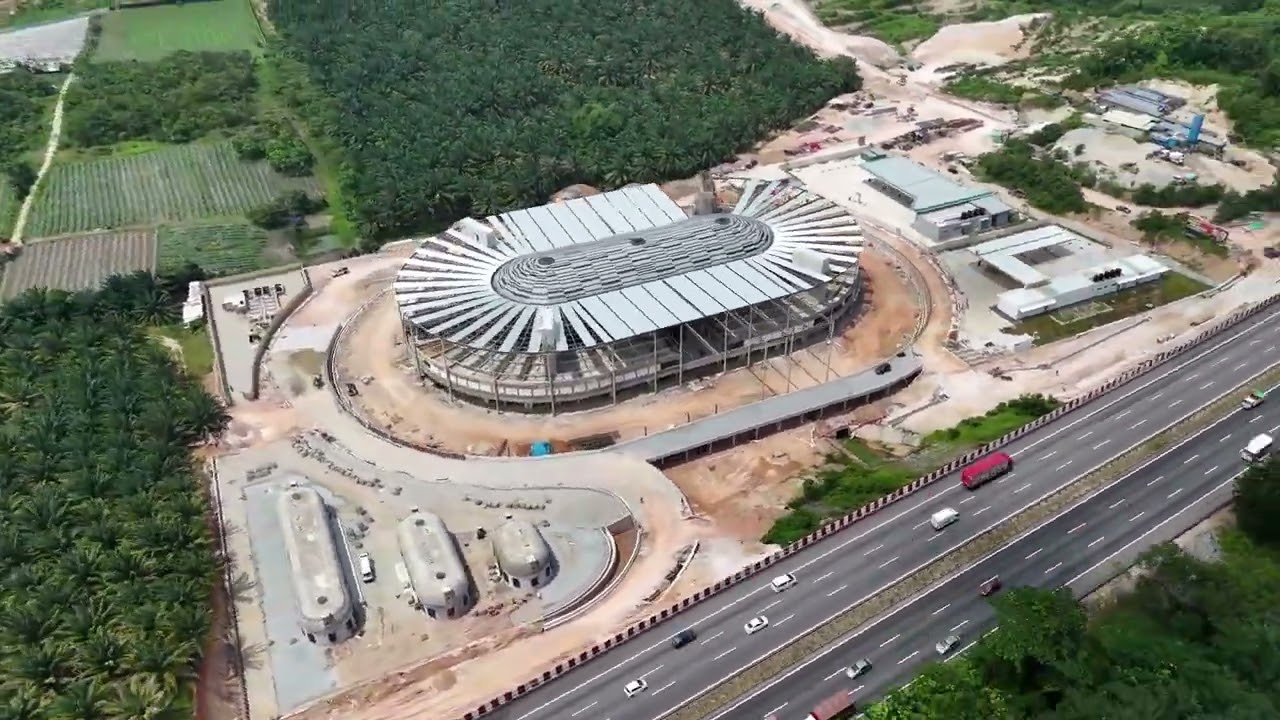
EVCC™ Pedas RSA, strategically located at KM241 (Southbound) on the PLUS North-South Expressway, is designed to meet this moment. Scheduled to open in early 2026, it redefines what a rest area in Malaysia can be.
This next-generation facility will feature Tesla Superchargers and Gentari High-Power Chargers, making it the most advanced EV charging hub on Malaysian highways. But charging is only the beginning.
EVCC™ will also offer a purpose-built lifestyle environment with high ceilings, natural daylighting, and a GreenRE Platinum–certified design. Dining spaces will be curated for both speed and experience. Retail will emphasize local brands, sustainability, and traveler convenience. Every aspect has been considered not just to serve travelers — but to attract them.
The Broader Vision: EVCC™ as Economic and Infrastructure Catalyst
The success of Korea’s rest stops reveals a larger truth: when designed with intent, rest areas become platforms. They generate recurring income from EV energy throughput, retail leasing, and digital services. They support local businesses, promote tourism, and enhance national branding. They transition from infrastructure to asset.
This is the vision behind EVCC™ Pedas RSA. It is not a one-off. It is a prototype — a scalable model for a national network of EV-focused, lifestyle-driven rest areas. As Malaysia moves toward Visit Malaysia Year 2026, which will bring millions of travelers to its roads, facilities like EVCC™ will be key to delivering world-class experiences between destinations.
The transformation of Malaysia’s highway ecosystem is not only possible — it is already underway. And EVCC™ Pedas RSA is setting the benchmark for what comes next.
To learn more about EVCC™ Pedas RSA and how we’re redefining the Malaysian highway experience, visit:🔗 www.evcc.my


Comments