
From Japan to Malaysia: How NEXCO’s Rest Areas Are Reshaping the Future of Highway Experiences
- Levn admin
- May 5, 2025
- 3 min read
Updated: May 16, 2025

Image Credit: Kariya Highway Oasis Co., Ltd.
Across the world, highway infrastructure is being reimagined — not as a backdrop to travel, but as a focal point of it. Few countries have achieved this transformation more successfully than Japan, where rest areas under NEXCO-Central (Central Nippon Expressway Company) are no longer stopovers, but full-fledged commercial and lifestyle destinations.
From experiential retail and curated local cuisine to onsen facilities and iconic landmarks like Ferris wheels, Japan’s rest areas demonstrate what’s possible when mobility is fused with culture, commerce, and design.
As Malaysia begins its own journey toward transforming the highway experience, particularly with the development of EVCC™ Pedas RSA, Japan’s NEXCO model offers both a benchmark and a blueprint.
JP NEXCO-Central: Redefining What Highway Rest Areas Can Be
Central Nippon Expressway Company Ltd. (NEXCO-Central) operates a vast network of more than 2,151 km of expressways, managing 181 rest areas and serving nearly 2 million vehicles daily. But these aren’t traditional pit stops. NEXCO has deliberately developed its service areas into destinations in their own right, blending functionality with entertainment and regional identity.
Two distinct service models — EXPASA and NEOPASA — represent NEXCO’s shift toward elevated experiences. These facilities are designed to offer not just fuel and food, but a curated mix of dining halls, specialty retail, relaxation zones, and tourism-forward amenities. What sets them apart is their place-making philosophy: every rest stop is tailored to reflect the character of the region it serves.
NEXCO’s rest areas generated over JPY 208 billion (~RM7.2 billion) in retail and food sales annually even before the pandemic — a testament to the commercial strength of mobility-linked destinations.
Kariya Highway Oasis: Where Infrastructure Meets Icon
The pinnacle of NEXCO’s experiential strategy is exemplified by the Kariya Highway Oasis in Aichi Prefecture — widely regarded as one of the most successful and visited highway rest areas in Japan.
Kariya Oasis blends conventional rest area amenities with leisure and family-friendly entertainment. Its standout feature is a 60-meter Ferris wheel, towering above the landscape and visible from the expressway, acting as both a navigation marker and a tourism magnet. Operating from 10:00 AM to 10:00 PM, the Ferris wheel offers panoramic views of the region and has become synonymous with the rest area itself.
This iconic attraction is part of a broader set of offerings at Kariya Oasis, which includes:
Natural hot spring facilities
Local souvenir shops and fresh produce markets
Themed food courts and regional cuisine outlets
Children’s play parks and cultural displays
Smart restrooms, digital concierge screens, and EV charging stations
Kariya receives 6.35 millions of visitors annually, many of whom travel not to refuel, but to relax. It exemplifies how a highway rest stop can evolve into a high-value leisure destination, integrating infrastructure with hospitality and economic development.
Malaysia’s Highway Future: EVCC™ Pedas RSA as the Starting Point
While most of Malaysia’s rest stops remain basic in structure — focused on petrol stations, surau, and food courts — the need for a modern, high-capacity, experience-driven solution is growing rapidly.
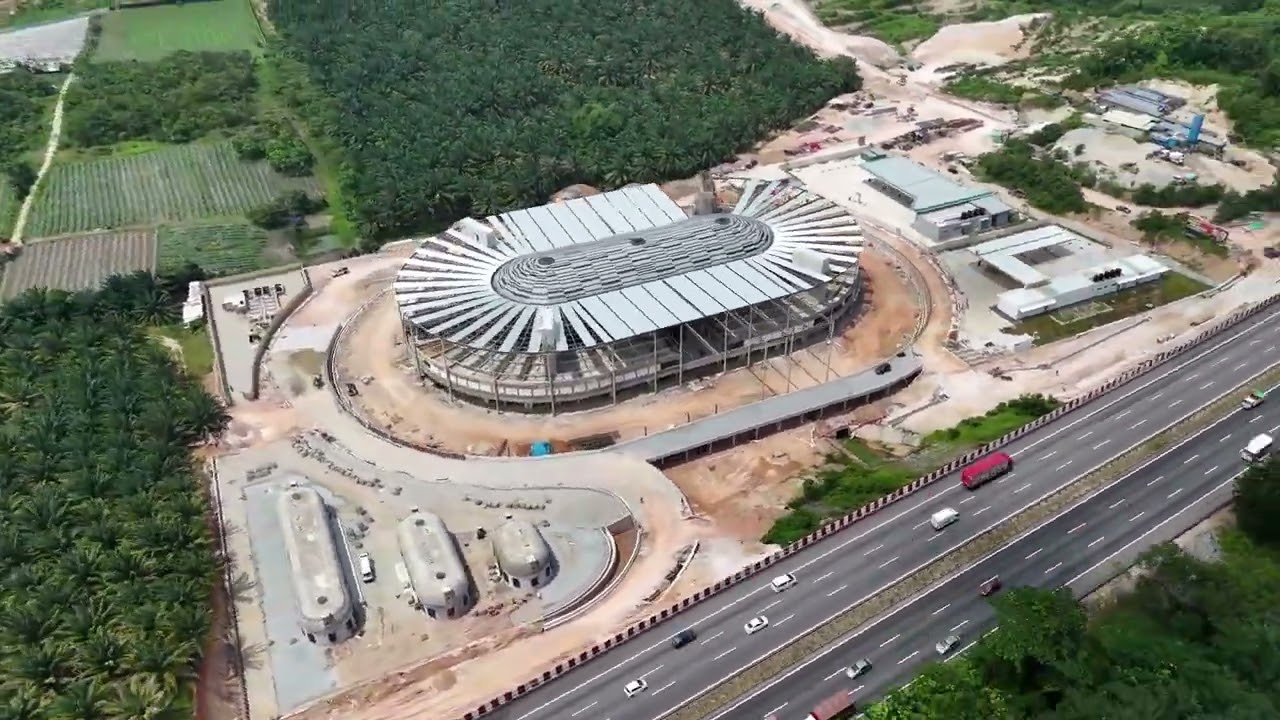
The upcoming EVCC™ Pedas RSA, located at KM241 (Southbound) along the PLUS Expressway, is Malaysia’s answer to that need. Slated to open by early 2026, it will be the country’s first privately developed, EV-centric rest area — taking cues from global models like Kariya Oasis and adapting them to the Malaysian context.
But more than its physical structure, what makes EVCC™ significant is its philosophy: to turn every stop into an experience, every charge into an opportunity, and every expressway corridor into a potential growth cluster.
Learning from Japan, Building for Malaysia
Japan’s NEXCO-Central — particularly through landmarks like Kariya Highway Oasis — has proven that highway infrastructure can do more than serve travelers. It can inspire them, retain them, and convert mobility into monetizable moments.
As Malaysia grows its expressway network, scales its EV ecosystem, and welcomes millions more local and international travelers in the coming years, the potential to apply this integrated model is immense.
EVCC™ Pedas RSA is the first move — not just in electrification, but in evolution.
Learn more about how EVCC™ is reshaping highway infrastructure in Malaysia:👉 www.evcc.my


Comments